
When Screens Start Taking Over: How to Help Your Child Reconnect Before the Real World Fades Away


If you've found yourself arguing about screens every day, negotiating "just five more minutes" for the tenth time, hiding devices, or wondering where your happy, engaged child has disappeared to, you're not alone.
Many parents feel trapped between wanting to protect their child and feeling overwhelmed by the constant battles that seem to follow.
You may have noticed your child becoming more irritable when screens are removed. Perhaps they seem less interested in playing outside, reading, drawing, building, or spending time with family. Maybe homework has become a struggle, sleep is disrupted, or boredom feels unbearable.
You may even find yourself quietly asking:
"Am I overreacting, or is this actually harming my child?"
The answer is not as simple as "screens are bad."
But neither is it true that unlimited screen time comes without consequences.
Children's brains evolved through movement, play, relationships, creativity, exploration, and sensory experiences. When screens begin replacing these essential developmental experiences for hours each day, there can be genuine impacts on emotional regulation, attention, sleep, motivation, resilience, and social development.
The problem isn't that children love screens.
The problem is when screens begin replacing the developmental experiences that growing brains need most.
The Quiet Grief Many Parents Carry
One of the conversations I have most often with parents isn't actually about screens.
It's about loss.
Many parents tell me:
"I miss my child."
Not because their child has disappeared.
But because the screen has gradually become the centre of family life.
They miss:
The spontaneous conversations.
The imaginative games.
The curiosity.
The laughter.
The child who once found wonder in ordinary things.
The challenges the child brought up with them at dinner time.
There is often grief in recognising that a device has become more engaging than the people and experiences around them.
If you're feeling this, you're not failing as a parent.
You are noticing that something important needs attention.
Why Screens Become So Powerful
Many parents assume children are simply being difficult when they resist turning off a device.
In reality, screens are often meeting very real needs.
Screens provide:
Instant rewards
Constant stimulation
Predictability
Achievement
Escape from difficult feelings
Relief from boredom
Social connection
For a developing brain, this combination can be incredibly appealing.
When children feel anxious, lonely, overwhelmed, bored, or disconnected, screens can become a reliable refuge.
This doesn't mean screens are the problem.
It means we need to understand what role they have started playing in a child's life.
What Growing Brains Need That Screens Cannot Fully Provide

Children develop through experiences that engage the whole body and nervous system.
They need opportunities to:
Move
Create
Explore
Problem solve
Take manageable risks
Connect with others
Experience boredom
Develop imagination
A screen can entertain.
A screen can educate.
A screen can connect.
But it cannot fully replace:
Climbing a tree
Building a cubby
Creating a painting
Digging in the garden
Riding a bike
Making a mess
Solving a disagreement with a friend
Having a meaningful conversation
Experience big emotions in meaningful and healthy ways
These experiences build the foundations of emotional resilience, confidence, attention, creativity, and healthy development.
Looking Beyond the Behaviour
One of the most powerful questions a parent can ask is:
"What need is the screen meeting?"
For some children, the answer may be:
Comfort
Connection
Achievement
Predictability
Stress relief
Escape from difficult emotions
When we focus only on removing the screen, we often create conflict.
When we understand the need underneath, we can begin creating healthier ways to meet it.
When Screen Use Begins to Impact Daily Life
Every child is different.
However, some common signs that screen use may be becoming problematic include:
Intense distress when devices are removed
Constant negotiation for more screen time
Difficulty enjoying non-screen activities
Sleep difficulties
Reduced motivation
Increased irritability
Withdrawal from family activities
Reduced interest in hobbies or friendships
Difficulty coping with boredom
These signs do not mean your child is damaged.
They are signals that balance may need restoring.
A Real-Life Example
Imagine this scenario.
You ask your child to turn off their game.
Immediately they yell.
They cry.
They slam a door.
They tell you that you're the worst parent in the world.
Ten minutes later they are calmly asking for a snack.
Many parents walk away from these moments feeling guilty or wondering if they have done something wrong.
Often, what you are witnessing is not deliberate disrespect.
You are seeing a nervous system struggling to transition from a highly stimulating activity to a less stimulating one.
Understanding this doesn't mean removing boundaries.
It means responding with calm, confident leadership rather than punishment or shame.
Why Doing Nothing Isn't Neutral
Many parents hope children will eventually "grow out of it."
Sometimes they do.
Often they don't.
When screen use continues to expand unchecked, children can gradually begin relying on screens as their primary source of:
Entertainment
Stress relief
Comfort
Achievement
Social connection
Emotional regulation
The concern is not the screen itself.
The concern is what children stop doing while the screen takes up more and more space.
The less practice children get with boredom, frustration, creativity, face-to-face relationships, and self-directed play, the harder those skills become to develop.
The Awakening Creative Therapies RECONNECT Framework

Rather than focusing solely on removing screens, focus on helping your child reconnect with the experiences their developing brain needs most.
R – Relationships
Children thrive through connection.
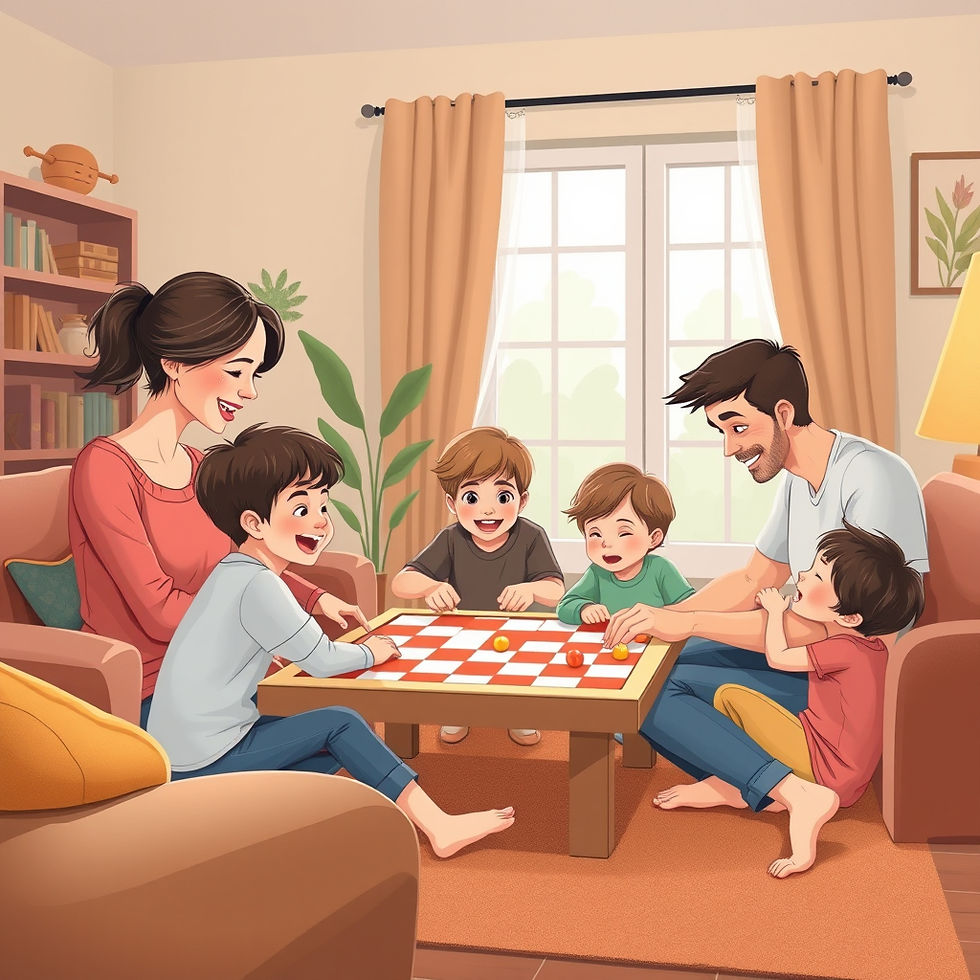
Prioritise family time, shared activities, conversations, and moments of genuine presence.
E – Expression
Provide opportunities for art, storytelling, music, imaginative play, and creative exploration.
C – Creativity
Encourage open-ended activities where there is no right or wrong outcome.
O – Outdoor Experiences
Nature offers sensory richness that no screen can replicate.
Walks, climbing, gardening, exploring, and free outdoor play all support nervous system regulation.
N – Nervous System Regulation
Movement, sensory play, physical activity, and predictable routines help children feel calmer and more balanced.
N – New Challenges
Children need opportunities to master real-world skills, solve problems, and build confidence.
E – Emotional Awareness
Help children recognise and express feelings rather than escaping from them.
C – Connection to Self
Support children in discovering who they are beyond a device, a game, or an online identity.
T – Time for Boredom
Boredom is not a problem to solve.
It is often the doorway to creativity, resilience, and imagination.
A Practical Plan for Change
Week 1: Establish Boundaries
Choose one screen-free period each day.
Examples:
During meals
The first hour after school
One hour before bedtime
Expect resistance.
Resistance is normal.
Week 2: Introduce Alternatives
Focus on connection and engagement rather than entertainment.
Offer opportunities for:
Art
Building
Outdoor play
Cooking
Board games
Reading together
Weeks 3–4: Stay Consistent
This is often when boredom starts transforming into creativity.
Children begin rediscovering activities they had previously abandoned.
Weeks 5–8: Notice the Shifts
Many families report:
Improved mood
Better sleep
More imaginative play
Reduced conflict
Greater family connection
Progress is rarely perfect.
What matters is consistency.
When Professional Support May Be Helpful
Consider seeking professional support if your child:
Experiences extreme distress around screen limits
Shows significant anxiety
Has difficulty engaging in daily life without screens
Is withdrawing socially
Is struggling at school
Has experienced trauma, loss, bullying, or major life changes
Sometimes excessive screen use is not the primary problem.
It is a coping strategy for something deeper.
Professional support can help identify what is driving the behaviour and provide strategies that support both the child and the family.
A Final Thought
Screens are not the enemy.
They are simply one small part of a child's world.
The real question is not:
"How do I get my child off screens?"
The more important question is:
"How do I help my child reconnect with life beyond the screen?"
When children spend more time moving, creating, exploring, connecting, imagining, and belonging, something remarkable often happens.
The battles begin to soften.
Curiosity returns.
Confidence grows.
And little by little, children begin rediscovering the parts of themselves that no screen can ever replace.


Comments